

Best Large Wooden Sheds UK 2026: Complete Buyer’s Guide
Looking for the best large wooden sheds the UK has to offer in 2026? Whether you need a proper workshop, serious garden storage, or a multi-purpose outdoor building, a large wooden shed delivers the space, durability and natural appeal that metal and plastic alternatives simply cannot match.
This guide covers everything you need to know before buying, from choosing the right size and cladding type to understanding treatment guarantees and base requirements. If you are ready to invest in a quality large wooden shed, read on.
What Counts as a Large Wooden Shed?
In practical terms, large wooden sheds start from around 8×6 feet and go up to 20×10 and beyond. The most popular sizes in this category are 8×6, 10×6, 10×8, and 12×8, each offering significantly more floor space than compact alternatives.
An 8×6 shed provides 48 square feet of usable space, which is enough for a workbench, bike storage, and generous tool organisation. Step up to a 10×8 and you have 80 square feet to play with, opening up genuine workshop potential alongside serious storage capacity.
If you are comparing sizes, our 10×6 Forest Beckwood shiplap pressure treated pent shed gives a great indication of what premium cladding and long-term treatment looks like in a popular large size.
Shiplap vs Overlap Cladding on Large Sheds
Cladding choice matters more on a large wooden shed because you have more surface area exposed to the elements. Overlap cladding is the budget-friendly option, using horizontal boards that overlap one another. It performs well when properly treated and maintained, but gaps can develop over time as the timber moves.
Shiplap cladding uses a tongue-and-groove profile that interlocks tightly, offering superior weatherproofing and a cleaner finish. On a large shed where wall area is considerable, shiplap is the smarter long-term investment. Most premium brands like Forest Beckwood and Shire use shiplap as standard on their larger models.
For a direct comparison across cladding types, see our full range of wooden garden sheds.
Apex vs Pent Roofs on Large Wooden Sheds
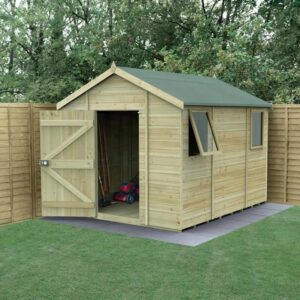
On a large shed, roof choice has real practical consequences. An apex roof creates a central ridge with equal slopes either side. This maximises internal headroom and handles rain runoff well from both directions. Most people working inside a large shed prefer apex roofs for the additional height at the centre.
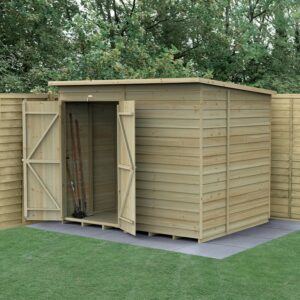
Pent roofs slope from front to back. They work particularly well when the shed sits against a wall or fence, as the lower rear edge can sit closer to the boundary. They tend to suit storage-focused sheds rather than workshop use, where headroom at the rear matters less.
Reverse apex designs are also available on select models, positioning the ridge along the length of the shed rather than the width. This gives wider double doors on the gable end, which suits vehicles, large tools, and equipment that needs straight-in access.
Treatment and Guarantee: What to Look For
A large wooden shed is a significant investment, so treatment quality and guarantee length deserve careful attention. Basic sheds come with a limited dip treatment that requires annual retreating. This is fine if you are happy to maintain the shed each year.
Pressure treated sheds are the step up. The timber is impregnated with preservative under pressure, protecting it from the inside out. This dramatically extends longevity and typically comes with a 10 to 25-year anti-rot guarantee depending on the brand.
Forest Beckwood models carry a 25-year anti-rot guarantee, which is the longest on the market and requires no further treatment. For a large shed where replacing or retreating large volumes of timber would be costly and time-consuming, pressure treatment is strongly recommended.
Browse our selection including the 8×6 Forest 4Life 25yr pressure treated apex wooden shed for a well-priced example of long-term protection in a popular size.
Base Requirements for Large Wooden Sheds
Every wooden shed needs a solid base, and this becomes even more important at larger sizes. A poorly prepared base under a large shed leads to warping, door misalignment, and structural movement that becomes progressively worse over time.
Concrete is the gold standard for large sheds. It provides a completely flat, load-bearing surface that resists moisture, pests, and movement. For sheds 10×8 and above, concrete is the recommended choice by most manufacturers and is often a warranty requirement.
Paving slabs on a compacted sand and hardcore sub-base are a practical alternative where concrete is not possible. They must be laid level with tight joints and a slight overhang beyond the shed footprint to prevent timber floor edges sitting in pooled water.
Assembly Considerations
Large wooden sheds are not solo projects. Most 10-foot-plus models require two or three people to assemble safely, particularly when lifting wall panels and roof sections. Budget a full day for assembly, and read the instructions fully before starting.
Many larger sheds, particularly Forest Beckwood models, use a modular panel system that makes assembly more manageable than traditional flat-pack designs. Sections arrive in pre-built panels rather than individual boards, significantly cutting build time and reducing the risk of errors.
Check that your site has clear vehicle access before ordering, as large shed deliveries often require a flatbed or long vehicle. Most deliveries are kerbside, so plan how you will move components to the installation point.
Frequently Asked Questions
What size shed do I need for a workshop?
A 10×8 shed is the minimum most people recommend for a functional workshop with a workbench and tool storage. A 10×10 or 12×8 gives considerably more room to work comfortably around larger projects.
Do large wooden sheds need planning permission?
Most large wooden sheds fall within permitted development rights as long as they are single storey, under 2.5m to the eaves, and not positioned forward of the principal elevation. Sheds over 15 square metres of ground coverage may require building regulations compliance. Always check with your local authority if you are unsure.
How long does a large pressure treated wooden shed last?
A quality pressure treated large wooden shed can last 20 to 30 years with minimal maintenance. Annual checks for damage, prompt repair of any issues, and a clean roof annually will keep the structure performing well throughout its life.
Can I insulate a large wooden shed?
Yes. Large wooden sheds are ideal for insulation, particularly models with shiplap cladding and a solid timber frame. Insulating the walls, floor, and roof allows year-round use as a garden office, hobby room, or workshop. Thicker framing (28mm x 56mm as used on Forest Beckwood models) provides better cavity for insulation materials.
Ready to Choose Your Large Wooden Shed?
The best large wooden shed for your garden depends on your space, intended use, and budget. Prioritise pressure treatment for long-term protection, shiplap cladding for superior weatherproofing, and a concrete base for stability.
Explore our full selection of wooden garden sheds to find the right size and specification for your outdoor space. For more guidance on premium options, see the 10×8 traditional heavy duty shiplap apex wooden shed.
